Everyone knows that living in a coastal area, be it north south or west means risking certain forces of nature. Floods have become an ever increasing threats in many parts of the country, but people still flock to river front towns even if it means living below sea level, because that is where the action is.
Earthquakes are a threat, particularly along some of the west cost fault lines, but that does not stop anyone from living in the fun in the sun state of California, because that is where the action is.
Hurricanes are a huge threat and in recent years have affected the Gulf Coast and eastern coast of Florida with devastating effects, but people still gravitate to those areas, because that is where the action is.
Living on an Island is certainly living on the edge --- or possibly over the edge, but we love it and many people dream of having a home on Martha’s Vineyard. What about the possible treat from Nor-Easters and those dreaded Hurricanes? Sure, we are always anticipating the next named storm and when it materializes we all start thinking about how to prepare for it, not having too many choices for where to run. But we love it here, because that is where the action is.
Many of my clients are not only concerned about hurricanes and the flooding associated with it, but they even have included elevation above sea level to their shopping criteria. I suppose that has to do with Al Gore and all that global warming stuff.
For Martha’s Vineyard, there seems to be some good news to report. We have had an unusually cool spring and summer and not a lot of rain so far. That means the water around us will not heat up until much later in the season. Oh yeah, the fishing has also been really good. Hurricanes thrive in warmer water, so I guess that means we can relax more than we usually do, at least according to the latest Reuters news report.
Follow this link to read more > Forecaster cuts 2007 hurricane outlook
Wednesday, July 25, 2007

Monday, July 23, 2007
I'm A Real Estate Buyer's Agent, And I Love What I Do.
I do not post editorials to my Blog unless I am the author, or collaborating with a colleague. However, this account of a personal real estate interaction written by a gentleman I know is so hilarious and poignant, I cannot resist sharing it.
Steve and his wife, having returned from a Sunday tour of open houses, were reflecting back on the events of the day and here is his impression of the experience.
A Buyer's Plea for Some Respect
By Steve Burnett © 2007
Reprinted by permission
Just because I don't happen to have my agent with me on this visit, doesn't mean I don't have one. Without an agent with me, we both know that your first question is likely to be, "are you working with somebody?" This really means you're trying to find out if there's any chance you can function as a dual agent and double your percentage. Or, maybe that same question is your way of determining if I'm really a serious buyer or just one of the neighbors from down the block. See those MLS sheets and Google maps in my hand? I'm not a neighbor from down the block. I'm looking to buy something. You'll see that in my eyes once you stop worrying about "establishing a dialog" or "getting to know your buyer" or when you stop asking yourself, "How can I tuck in an extra 2.5 points on this deal?"
Aside from pointing out something notable or unusual, I really don't need you to announce, "...and this is the hall bathroom..." as we tour the house. I know what bathrooms and bedrooms and kitchens look like already, thank you. Perhaps you're used to dealing in twenty-room mansions where the function or location of each room might have to be explained, but I'm just a regular guy looking for your average 3/2 suburban rancher. It's not likely I'm going to get lost or confused about what a particular room is, so save your chatter until you have something really informative to tell me.
In fact, hold your chatter, period. Unbeknownst to you, my wife and I have just flipped a coin in the car outside to determine which one of us has to take the chore of talking to you and answering all your questions so the other one of us actually gets to look at the place in a somewhat uninterrupted manner.
If you think you're going to entice me into making an offer by claiming that you have other offers coming in soon, or telling me how many other folks have seen your open house today, expect me to turn on my heel and exit your open house. Attempting to create the appearance of scarcity is so 2004. There's no point in me getting into a bidding war, real or imagined. If you don't believe that, please revisit the months-of-supply and DOM numbers for your area. Hint: I've seen those numbers!
I know what new paint looks like, and I know what old paint looks like. It's not super important for you to point out the difference, since $50 bucks at Home Depot, a few beers, and a few hours on a Saturday are all that are required for me to solve any paint issues in a room. I'd rather you let me decide what the value of such "upgrades" are. Hint: You are not going to get a few extra grand in value just because the seller took $50 bucks, a few beers, and an afternoon to slap some trendy color on the walls. Same story applies with crown molding and wainscoting. Forget what you and your sellers have seen on HGTV; you are not going to get a 10X return-on-investment for a few hundred bucks worth of DIY projects. If the basic value of the house in not there due to the number of rooms, location, or dollars per square foot, no amount of superficial "upgrades" are going to change that basic value. Conversely, if the basic value is there, I'm very prone to overlooking lime green walls, chipped tile, and a myriad of cosmetic issues.
The whole staging thing is getting really old. Does the house you live in have strategically placed bottle of wine with a pair of glasses on the patio table every night of the week? My current house doesn't, I can assure you that the only time there's a big bowl of fresh-cut flowers on the kitchen table is on Valentine's Day, or when I've made my wife mad. Normal people live in homes where the coffee table has a bunch of remotes, chewed-up dog toys and six-month old magazines. A staged house always seems to have a book of Tuscan sunsets, a bowl of teal-colored marbles, and nothing else on that coffee table. Sure, ask the sellers to tidy up a bit. But don't stage the place to the point where it's a cliché, or to a point where it's not even plausible that actual people might live in the house. Really, I'm trying to look through all the fruit bowls, cute soap bars, and other doo-dads you've carefully placed. It insults my intelligence that you think crap like that might make me want a particular property more than what I would have without the staging. In spite of what you have heard, a vacant house with no furnishings whatsoever is fine.
You know all those apple pie-scented candles in your trunk you've been packing around for each open house you do? Dump them. Put them in your own garage for the next power outage. Give them to some homeless. Do anything but use them to give potential open houses that "home" feeling. Virtually every single one of your competitors is already trying the same idea. Unless your property has dead animals underneath the floor boards, or had the living room used as an indoor kennel, there's really no scent that you can add that is going to want to make me want to buy something I wouldn't otherwise. Back to the intelligence thing: Do you honestly believe that people make large, 30-year financial commitments because they caught a whiff of punkin' pie? Don't even get me started on chocolate chip cookies or popcorn. Yes, I've read the studies about how the rational mind can be strongly influenced by scents. When you try that play, all I really smell is your desperation.
Basic literacy: FYI, the windows that you're trying to tell me about are spelled: "dual pane", not "duel pain" or duel pane". I only bring this up because I've really seen these spelling variants in many listings. Same issue with !!! $ALL CAPS DESCRIPTION$ !!!! and TXT THT LKS LK A 14YO GRL might be sending me a text message. I expect to see that kind of writing for Beanie Babies on eBay, not on a $500,000 home listing. Again, it's a mistake for you to think I might be dumb enough to give your listing any more than the usual amount of attention due to the number of exclamation points. Fact is, I'm less likely to look at such a listing because your writing skills look like you dropped out of high school and I'm not likely to trust you with such an important purchase.
It's not 2005 anymore, and buyers like me are getting back to pure fundamentals: Dollars per square foot, and location. Stuff you can't change with new paint or by "spicing up" your listing description. Remember, I'm looking at buying in a down market and maybe having to sit through a few years of little or no appreciation. You can help me by explaining how the fundamentals of your property might work for me. You can save us both some grief if you can help your seller to understand that it's not 2005 and that the next buyer is not likely going to enjoy a 20% per year price appreciation and the price should be set accordingly. Sorry, it's a new market now.
Steve and his wife, having returned from a Sunday tour of open houses, were reflecting back on the events of the day and here is his impression of the experience.
A Buyer's Plea for Some Respect
By Steve Burnett © 2007
Reprinted by permission
Just because I don't happen to have my agent with me on this visit, doesn't mean I don't have one. Without an agent with me, we both know that your first question is likely to be, "are you working with somebody?" This really means you're trying to find out if there's any chance you can function as a dual agent and double your percentage. Or, maybe that same question is your way of determining if I'm really a serious buyer or just one of the neighbors from down the block. See those MLS sheets and Google maps in my hand? I'm not a neighbor from down the block. I'm looking to buy something. You'll see that in my eyes once you stop worrying about "establishing a dialog" or "getting to know your buyer" or when you stop asking yourself, "How can I tuck in an extra 2.5 points on this deal?"
Aside from pointing out something notable or unusual, I really don't need you to announce, "...and this is the hall bathroom..." as we tour the house. I know what bathrooms and bedrooms and kitchens look like already, thank you. Perhaps you're used to dealing in twenty-room mansions where the function or location of each room might have to be explained, but I'm just a regular guy looking for your average 3/2 suburban rancher. It's not likely I'm going to get lost or confused about what a particular room is, so save your chatter until you have something really informative to tell me.
In fact, hold your chatter, period. Unbeknownst to you, my wife and I have just flipped a coin in the car outside to determine which one of us has to take the chore of talking to you and answering all your questions so the other one of us actually gets to look at the place in a somewhat uninterrupted manner.
If you think you're going to entice me into making an offer by claiming that you have other offers coming in soon, or telling me how many other folks have seen your open house today, expect me to turn on my heel and exit your open house. Attempting to create the appearance of scarcity is so 2004. There's no point in me getting into a bidding war, real or imagined. If you don't believe that, please revisit the months-of-supply and DOM numbers for your area. Hint: I've seen those numbers!
I know what new paint looks like, and I know what old paint looks like. It's not super important for you to point out the difference, since $50 bucks at Home Depot, a few beers, and a few hours on a Saturday are all that are required for me to solve any paint issues in a room. I'd rather you let me decide what the value of such "upgrades" are. Hint: You are not going to get a few extra grand in value just because the seller took $50 bucks, a few beers, and an afternoon to slap some trendy color on the walls. Same story applies with crown molding and wainscoting. Forget what you and your sellers have seen on HGTV; you are not going to get a 10X return-on-investment for a few hundred bucks worth of DIY projects. If the basic value of the house in not there due to the number of rooms, location, or dollars per square foot, no amount of superficial "upgrades" are going to change that basic value. Conversely, if the basic value is there, I'm very prone to overlooking lime green walls, chipped tile, and a myriad of cosmetic issues.
The whole staging thing is getting really old. Does the house you live in have strategically placed bottle of wine with a pair of glasses on the patio table every night of the week? My current house doesn't, I can assure you that the only time there's a big bowl of fresh-cut flowers on the kitchen table is on Valentine's Day, or when I've made my wife mad. Normal people live in homes where the coffee table has a bunch of remotes, chewed-up dog toys and six-month old magazines. A staged house always seems to have a book of Tuscan sunsets, a bowl of teal-colored marbles, and nothing else on that coffee table. Sure, ask the sellers to tidy up a bit. But don't stage the place to the point where it's a cliché, or to a point where it's not even plausible that actual people might live in the house. Really, I'm trying to look through all the fruit bowls, cute soap bars, and other doo-dads you've carefully placed. It insults my intelligence that you think crap like that might make me want a particular property more than what I would have without the staging. In spite of what you have heard, a vacant house with no furnishings whatsoever is fine.
You know all those apple pie-scented candles in your trunk you've been packing around for each open house you do? Dump them. Put them in your own garage for the next power outage. Give them to some homeless. Do anything but use them to give potential open houses that "home" feeling. Virtually every single one of your competitors is already trying the same idea. Unless your property has dead animals underneath the floor boards, or had the living room used as an indoor kennel, there's really no scent that you can add that is going to want to make me want to buy something I wouldn't otherwise. Back to the intelligence thing: Do you honestly believe that people make large, 30-year financial commitments because they caught a whiff of punkin' pie? Don't even get me started on chocolate chip cookies or popcorn. Yes, I've read the studies about how the rational mind can be strongly influenced by scents. When you try that play, all I really smell is your desperation.
Basic literacy: FYI, the windows that you're trying to tell me about are spelled: "dual pane", not "duel pain" or duel pane". I only bring this up because I've really seen these spelling variants in many listings. Same issue with !!! $ALL CAPS DESCRIPTION$ !!!! and TXT THT LKS LK A 14YO GRL might be sending me a text message. I expect to see that kind of writing for Beanie Babies on eBay, not on a $500,000 home listing. Again, it's a mistake for you to think I might be dumb enough to give your listing any more than the usual amount of attention due to the number of exclamation points. Fact is, I'm less likely to look at such a listing because your writing skills look like you dropped out of high school and I'm not likely to trust you with such an important purchase.
It's not 2005 anymore, and buyers like me are getting back to pure fundamentals: Dollars per square foot, and location. Stuff you can't change with new paint or by "spicing up" your listing description. Remember, I'm looking at buying in a down market and maybe having to sit through a few years of little or no appreciation. You can help me by explaining how the fundamentals of your property might work for me. You can save us both some grief if you can help your seller to understand that it's not 2005 and that the next buyer is not likely going to enjoy a 20% per year price appreciation and the price should be set accordingly. Sorry, it's a new market now.
Wednesday, July 18, 2007
The Real Estate Shell Game
By Peter C. Fyler with editorial input from Jon Boyd, 2007 President, National Association of Exclusive Buyer’s Agents
© 2007 SplitRock Real Estate, LLC
I’m an exclusive buyer agent on Martha’s Vineyard and my job is representing buyers; that’s it plain and simple. I have no allegiance or responsibility to sellers beyond the rules of courtesy and common decency set forth in my REALTOR® and NAEBA Association Code of Ethics.
You’re a Buyer looking for your dream home, and if you do what most buyers do today, you start looking for that dream home on the Internet. You may go from one real estate company’s website to another plowing through their listings looking for that perfect property. You must be aware the listing company and all its agents represent the seller, not you. With that said, let’s take a look at the real estate shell game.
Shell #1 - Loss Leader: You see what you think is your dream home listed by company A. Excitedly, you call company A and you ask the listing agent answering the phone about the property you saw on their website. You are told apologetically, that it’s under contract to be sold or already SOLD! The agent says they were about to change the status or remove it from the website, and then they immediately suggest other properties in their inventory. Most likely this was not an accident or oversight on the part of the real estate company. In general commerce, they call this kind of advertising ‘loss leader’ or ‘bait and switch’.
Our Martha’s Vineyard Listing Information Network (LINK) provides a system of codes designed to keep information current, but LINK cannot dictate behavior to its subscribers. Not all real estate agencies ignore their responsibility to keep information current, yet many excuse themselves saying they will not change the status until the last contingency is met or even until the deed is signed. Probably more than 95% of the transactions here on Martha’s Vineyard go to record. Another excuse is to say it’s just business in a competitive market; it makes the phone ring, and perhaps the buyer could be steered to another property. Who does that benefit? It benefits the real estate company and the sellers of those properties still languishing in the unsold inventory. It does not benefit buyers like you and it frustrates buyer agents like me.
Shell #2 - Show Me the Money: Another trick is for agents in traditional real estate companies to call themselves buyer agents. At best, they are Designated Buyer’s Agents, Dual Agents or Transactional Agents better known as Facilitators. Look at real estate websites and print advertising, what do you see? You see dozens of properties advertised for sale. All of these properties are supported by seller agency written contracts and an agency commitment to get the highest price and best terms for the seller. Furthermore, advertising is very costly and therefore another incentive to get as much for the seller’s property as possible. A true buyer’s agent is always a buyer’s agent and never switches roles; they only represent people, not property. Only Exclusive Buyer Agents exhibit advanced skills in property analysis, price evaluation and negotiation. There is one more trick I want you to know about.
Shell #3 - The Meat Grinder: While you are surfing the Internet looking for your dream home, most likely you have come across some intriguing and very slick real estate websites boasting to be your number one real estate resource. Many of these companies will not let you look for an agent or review properties for sale until you fill out a complete contact information form. Even then, you may have to wait for a response with the promise that you will be contacted by the best real estate agent in your area, a real estate agent that you did not personally choose. These are not real estate companies, they are advertising companies only interested in one thing --- making money. They may even send your contact information to several “best” agents. They don’t care who or what they represent. If a real estate agent can pay the price, and it’s a steep price, these companies will send them “leads”, or display listings for them, even if those listings don’t belong to the company advertising them.
If you have ever inquired about listings on one of these websites, you most likely realized the information was quite often inaccurate or obsolete. It is all about getting the leads. As I said before, these leads are expensive, so the agent subscriber will want to recapture their advertising expense, and you can bet that will be at your expense --- the BUYER.
Another unfortunate aspect of these lead generation services is the agents that buy your contact information are often the least experienced agents in the market. Some of the companies that do this type of pay-per-lead marketing are Connect2agent, Homegain, Neighborhoodscout, Realtyconnect and Servicemagic. Many of my seasoned colleagues who have tried these services will say you gain almost nothing for the money spent. Common sense should tell you the smartest way to find the best agent or properties in the area you are interested in, is to look for a company in that area.
© 2007 SplitRock Real Estate, LLC
I’m an exclusive buyer agent on Martha’s Vineyard and my job is representing buyers; that’s it plain and simple. I have no allegiance or responsibility to sellers beyond the rules of courtesy and common decency set forth in my REALTOR® and NAEBA Association Code of Ethics.
You’re a Buyer looking for your dream home, and if you do what most buyers do today, you start looking for that dream home on the Internet. You may go from one real estate company’s website to another plowing through their listings looking for that perfect property. You must be aware the listing company and all its agents represent the seller, not you. With that said, let’s take a look at the real estate shell game.
Shell #1 - Loss Leader: You see what you think is your dream home listed by company A. Excitedly, you call company A and you ask the listing agent answering the phone about the property you saw on their website. You are told apologetically, that it’s under contract to be sold or already SOLD! The agent says they were about to change the status or remove it from the website, and then they immediately suggest other properties in their inventory. Most likely this was not an accident or oversight on the part of the real estate company. In general commerce, they call this kind of advertising ‘loss leader’ or ‘bait and switch’.
Our Martha’s Vineyard Listing Information Network (LINK) provides a system of codes designed to keep information current, but LINK cannot dictate behavior to its subscribers. Not all real estate agencies ignore their responsibility to keep information current, yet many excuse themselves saying they will not change the status until the last contingency is met or even until the deed is signed. Probably more than 95% of the transactions here on Martha’s Vineyard go to record. Another excuse is to say it’s just business in a competitive market; it makes the phone ring, and perhaps the buyer could be steered to another property. Who does that benefit? It benefits the real estate company and the sellers of those properties still languishing in the unsold inventory. It does not benefit buyers like you and it frustrates buyer agents like me.
Shell #2 - Show Me the Money: Another trick is for agents in traditional real estate companies to call themselves buyer agents. At best, they are Designated Buyer’s Agents, Dual Agents or Transactional Agents better known as Facilitators. Look at real estate websites and print advertising, what do you see? You see dozens of properties advertised for sale. All of these properties are supported by seller agency written contracts and an agency commitment to get the highest price and best terms for the seller. Furthermore, advertising is very costly and therefore another incentive to get as much for the seller’s property as possible. A true buyer’s agent is always a buyer’s agent and never switches roles; they only represent people, not property. Only Exclusive Buyer Agents exhibit advanced skills in property analysis, price evaluation and negotiation. There is one more trick I want you to know about.
Shell #3 - The Meat Grinder: While you are surfing the Internet looking for your dream home, most likely you have come across some intriguing and very slick real estate websites boasting to be your number one real estate resource. Many of these companies will not let you look for an agent or review properties for sale until you fill out a complete contact information form. Even then, you may have to wait for a response with the promise that you will be contacted by the best real estate agent in your area, a real estate agent that you did not personally choose. These are not real estate companies, they are advertising companies only interested in one thing --- making money. They may even send your contact information to several “best” agents. They don’t care who or what they represent. If a real estate agent can pay the price, and it’s a steep price, these companies will send them “leads”, or display listings for them, even if those listings don’t belong to the company advertising them.
If you have ever inquired about listings on one of these websites, you most likely realized the information was quite often inaccurate or obsolete. It is all about getting the leads. As I said before, these leads are expensive, so the agent subscriber will want to recapture their advertising expense, and you can bet that will be at your expense --- the BUYER.
Another unfortunate aspect of these lead generation services is the agents that buy your contact information are often the least experienced agents in the market. Some of the companies that do this type of pay-per-lead marketing are Connect2agent, Homegain, Neighborhoodscout, Realtyconnect and Servicemagic. Many of my seasoned colleagues who have tried these services will say you gain almost nothing for the money spent. Common sense should tell you the smartest way to find the best agent or properties in the area you are interested in, is to look for a company in that area.
Wednesday, July 11, 2007
I've Seen It All On Martha's Vineyard
For as long as I can remember it has been a mystery to me how some home owners here on Martha's Vineyard decide to sell their family home, hire a seller's agent, agree to pay a fee and put their home on the market but never take the time to clean and fix up their home and property, not even just a little.
One would think a seller would at least fix that broken staircase to the second floor bedrooms so a prospective buyer would not have to use an outside staircase to get to the second floor living area. One would think the two Rottweilers running loose in the house would be sequestered outside when the seller's agent shows the property.
A prospective buyer coming into a house and contemplating living there needs to see through the distracting maze of stuff the home owner has accumulated over the last 30 years; they need to see themselves living in that home. They will see nothing if they are trying to dodge the growling dogs, making sure their child doesn't fall through a broken staircase, or navigate around dirty laundry strewn across the living room floor.
Staging and Feng Shui is all the buzz now, but for the most part we still ignore it on Martha's Vineyard. I guess you might say the pervasive attitude is “We’re Martha's Vineyard and we’re hot so deal with it!”
I belong to the National Association of Exclusive Buyer Agents (NAEBA) and below is an article being circulated throughout the media in this country. You may get a chuckle out of it, but more importantly, if you are a seller, pay attention and give your agent and my buyer clients a break. Remember, sellers want to sell, buyers want to buy and real estate agents want to make it happen.
Buyer Beware: Skeletons in the Closet
(and Aliens in the Basement)
ARLINGTON, Va., June 22 /PRNewswire-USNewswire/ -- How much do you suppose a pile of crunchy dead bugs on the basement floor will affect the selling price of a $500,000 home? How about a life-size skeleton hanging in the closet, or an open coffin in the basement with a dummy vampire inside? Or an overly-ripe kitty litter box under the kitchen table?
The National Association of Exclusive Buyer Agents (NAEBA) recently conducted an online survey of their members to rate the items they found most annoying when searching for a new home with buyers. Since these real estate companies are always looking out for the buyer's best interest they don't pull any punches. The results of the survey are revealing, surprising, and sometimes downright weird.
Here are the top five things exclusive buyer's agents find most annoying when previewing a home:
1. Broken door locks preventing access to the house.
2. Pet deposits in the back yard or dirty cat boxes.
3. Missing light bulbs in the basement.
4. Sellers that ask you to remove shoes and then have wet carpet or dirty
floors.
5. Having loose stairs on a stairway or missing banisters.
Other reported annoyances include:
6. Low hanging dining room light fixtures in a vacant home.
7. Closet doors that fall off or are not adjusted properly.
8. Going into a vacant home and hearing animals in the walls.
9. Halloween decorations that are left out.
10. Dangerous children's toys left out.
11. Dead cars in the driveway or yard.
12. Homes on large lots without a survey or description of the lot
boundaries.
13. Political signs.
14. Graffiti on a home for sale.
15. Dead birds or animals in or around the home.
It seems that many home sellers are not overly-endowed with common sense. Closet doors falling off? Dead animals in the front yard? The pitter-patter of mousy feet in the walls? Scary Halloween decorations all over the house? These should all be no-brainers. Sending buyers away disgusted or frightened out of their wits is probably not the best of business decisions. Neither is killing or maiming them with dangerous children's toys left as booby traps.
Jon Boyd, President of NAEBA, relates some of the unbelievable things he's encountered over the years when going through homes for sale. "Once I was previewing a fairly expensive home by myself. I go into the huge basement and I can't find the light switch. As I'm reaching around a corner I catch a light switch and turn it on. About 8 feet in front of me is a life-sized model of the ALIEN MONSTER LOOKING RIGHT AT ME! My heart starts beating again in a few minutes when I figure out what the stupid thing is, but whose idea was it to leave the thing there while the home is on the market?"
At another house Boyd almost became an unwitting participant in a Chaplinesque silent comedy. "I'm stepping into the basement the first time with buyers right behind me, again without good lighting. My foot hits something and when the light goes on I see I just barely missed stepping off the step onto a roller skate. I'm serious. Can you picture me flipping over onto my back like a cartoon character? If my foot had come down 2 inches to the left..."
Silliness aside, there is an important lesson here for home sellers. "In all these cases the buyer's attention is diverted from evaluating the home to something mildly disgusting or frustrating," says Boyd. "If sellers have a dead pigeon lying on the deck it will just help our buyers negotiate a better price because of less competition. But let's try to leave the skeletons and coffins for the Halloween party!"
The National Association of Exclusive Buyer Agents was founded in 1995 to help consumers become educated homebuyers. NAEBA is a nonprofit organization whose purpose is to be the "champions of real estate buyers' rights and representation." It has over 500 members nationwide. Starting in the mid- 1990s, savvy buyers wanted the benefits of a real estate representative working for their interests exclusively. They turned to EBAs, Exclusive Buyer Agents, to do the job. NAEBA is an industry group dedicated to supporting EBAs in serving clients to the best of their ability. NAEBA offers industry standard certifications, ongoing education, client referral service, technology and information sharing. The NAEBA Code of Ethics pledges undivided loyalty to real estate buyers only. More information about NAEBA can be found at http://www.naeba.org.
Web site: http://www.naeba.org/
One would think a seller would at least fix that broken staircase to the second floor bedrooms so a prospective buyer would not have to use an outside staircase to get to the second floor living area. One would think the two Rottweilers running loose in the house would be sequestered outside when the seller's agent shows the property.
A prospective buyer coming into a house and contemplating living there needs to see through the distracting maze of stuff the home owner has accumulated over the last 30 years; they need to see themselves living in that home. They will see nothing if they are trying to dodge the growling dogs, making sure their child doesn't fall through a broken staircase, or navigate around dirty laundry strewn across the living room floor.
Staging and Feng Shui is all the buzz now, but for the most part we still ignore it on Martha's Vineyard. I guess you might say the pervasive attitude is “We’re Martha's Vineyard and we’re hot so deal with it!”
I belong to the National Association of Exclusive Buyer Agents (NAEBA) and below is an article being circulated throughout the media in this country. You may get a chuckle out of it, but more importantly, if you are a seller, pay attention and give your agent and my buyer clients a break. Remember, sellers want to sell, buyers want to buy and real estate agents want to make it happen.
Buyer Beware: Skeletons in the Closet
(and Aliens in the Basement)
ARLINGTON, Va., June 22 /PRNewswire-USNewswire/ -- How much do you suppose a pile of crunchy dead bugs on the basement floor will affect the selling price of a $500,000 home? How about a life-size skeleton hanging in the closet, or an open coffin in the basement with a dummy vampire inside? Or an overly-ripe kitty litter box under the kitchen table?
The National Association of Exclusive Buyer Agents (NAEBA) recently conducted an online survey of their members to rate the items they found most annoying when searching for a new home with buyers. Since these real estate companies are always looking out for the buyer's best interest they don't pull any punches. The results of the survey are revealing, surprising, and sometimes downright weird.
Here are the top five things exclusive buyer's agents find most annoying when previewing a home:
1. Broken door locks preventing access to the house.
2. Pet deposits in the back yard or dirty cat boxes.
3. Missing light bulbs in the basement.
4. Sellers that ask you to remove shoes and then have wet carpet or dirty
floors.
5. Having loose stairs on a stairway or missing banisters.
Other reported annoyances include:
6. Low hanging dining room light fixtures in a vacant home.
7. Closet doors that fall off or are not adjusted properly.
8. Going into a vacant home and hearing animals in the walls.
9. Halloween decorations that are left out.
10. Dangerous children's toys left out.
11. Dead cars in the driveway or yard.
12. Homes on large lots without a survey or description of the lot
boundaries.
13. Political signs.
14. Graffiti on a home for sale.
15. Dead birds or animals in or around the home.
It seems that many home sellers are not overly-endowed with common sense. Closet doors falling off? Dead animals in the front yard? The pitter-patter of mousy feet in the walls? Scary Halloween decorations all over the house? These should all be no-brainers. Sending buyers away disgusted or frightened out of their wits is probably not the best of business decisions. Neither is killing or maiming them with dangerous children's toys left as booby traps.
Jon Boyd, President of NAEBA, relates some of the unbelievable things he's encountered over the years when going through homes for sale. "Once I was previewing a fairly expensive home by myself. I go into the huge basement and I can't find the light switch. As I'm reaching around a corner I catch a light switch and turn it on. About 8 feet in front of me is a life-sized model of the ALIEN MONSTER LOOKING RIGHT AT ME! My heart starts beating again in a few minutes when I figure out what the stupid thing is, but whose idea was it to leave the thing there while the home is on the market?"
At another house Boyd almost became an unwitting participant in a Chaplinesque silent comedy. "I'm stepping into the basement the first time with buyers right behind me, again without good lighting. My foot hits something and when the light goes on I see I just barely missed stepping off the step onto a roller skate. I'm serious. Can you picture me flipping over onto my back like a cartoon character? If my foot had come down 2 inches to the left..."
Silliness aside, there is an important lesson here for home sellers. "In all these cases the buyer's attention is diverted from evaluating the home to something mildly disgusting or frustrating," says Boyd. "If sellers have a dead pigeon lying on the deck it will just help our buyers negotiate a better price because of less competition. But let's try to leave the skeletons and coffins for the Halloween party!"
The National Association of Exclusive Buyer Agents was founded in 1995 to help consumers become educated homebuyers. NAEBA is a nonprofit organization whose purpose is to be the "champions of real estate buyers' rights and representation." It has over 500 members nationwide. Starting in the mid- 1990s, savvy buyers wanted the benefits of a real estate representative working for their interests exclusively. They turned to EBAs, Exclusive Buyer Agents, to do the job. NAEBA is an industry group dedicated to supporting EBAs in serving clients to the best of their ability. NAEBA offers industry standard certifications, ongoing education, client referral service, technology and information sharing. The NAEBA Code of Ethics pledges undivided loyalty to real estate buyers only. More information about NAEBA can be found at http://www.naeba.org.
Web site: http://www.naeba.org/
Tuesday, July 10, 2007
Not All Buyer Agents Are Created Equal
In the July 16 issue of Newsweek, there is an article outlining the benefits of using a buyer agent.
Please remember any seller’s agent can double as a buyer’s agent, but if the buyer expresses an interest in a property represented by that agent’s office, the agent can no longer represent the buyer’s best interests; they become a Dual Agent and it is in their best interest to sell in-house listings.
Exclusive Buyer Agency guarantees the buyer unconditional undivided loyalty at all times throughout the entire home buying process. Buyer advocacy requires enhanced negotiation and property evaluation skills.
Follow this link to read more > Real Estate: Call Your Agent
Please remember any seller’s agent can double as a buyer’s agent, but if the buyer expresses an interest in a property represented by that agent’s office, the agent can no longer represent the buyer’s best interests; they become a Dual Agent and it is in their best interest to sell in-house listings.
Exclusive Buyer Agency guarantees the buyer unconditional undivided loyalty at all times throughout the entire home buying process. Buyer advocacy requires enhanced negotiation and property evaluation skills.
Follow this link to read more > Real Estate: Call Your Agent
Thursday, June 28, 2007
Cool Tool Available to Martha’s Vineyard NStar Customers
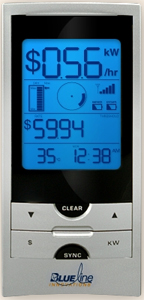
I just received a gadget that is being offered through an NStar utility partner, Blueline Innovations. It’s a wireless device that is not difficult to install or set up. Besides the ability to intelligently monitor power usage in your home, I think it can be a fun learning tool for children and the whole family to educate them about energy conservation. The Power Cost Monitor is available right now for $29.95 with a promotion code for NStar customers, BUT the price is expected to go up to $135.00US after June 30, 2007. Follow this link to learn more about the PowerCost Monitor™.
Monday, June 25, 2007
I Love Martha's Vineyard
I have lived on Martha’s Vineyard part time and full time for over 40 years, and I have seen a lot of changes --- some good and some bad. For the most part the Vineyard has still maintained its New England charm and tenor.
When I was a little boy my family summered in the Hampton's on Long Island. It was a magical part of my boyhood, but when I went back a number of years ago everything had changed.
I love these two lines from an article that appeared in The Record this past Sunday:
“Overrun? Maybe. Devine? Definitely!”
And then there was this quote:
"Southampton, eat your heart out!"
Follow this link to read about Martha’s Vineyard --- A Great Hideaway from the Rat Race
When I was a little boy my family summered in the Hampton's on Long Island. It was a magical part of my boyhood, but when I went back a number of years ago everything had changed.
I love these two lines from an article that appeared in The Record this past Sunday:
“Overrun? Maybe. Devine? Definitely!”
And then there was this quote:
"Southampton, eat your heart out!"
Follow this link to read about Martha’s Vineyard --- A Great Hideaway from the Rat Race
Friday, June 15, 2007
Buying A Home On Martha’s Vineyard Should Be Fun
House hunting on Martha’s Vineyard can be fun, and I make sure it is fun. However, I find many buyers new to the market get caught up in things that are irrelevant while failing to consider what’s really important. They may base their decision on a Japanese Maple tree in the front yard, the green granite counter tops in the kitchen, or the color of the carpeting in the living room. I believe it is my responsibility as an exclusive buyer representative to keep my buyer-clients focused on the big picture, even though some of that may be more sobering than joyful. Please read this report by RealEstate.com on Four Strategies to Make House Hunting Easier
Thursday, May 24, 2007
The Housing Slump Isn't Over Yet After All.
The beginning of 2007 took off with a flourish of sales activity. Shrewd investors took advantage of market uncertainty successfully negotiating good buys for many of the better properties here. The prediction of low and stabile interest rates and a strong economy suggested a turn around in the housing market was eminent. Then came the subprime lending fiasco which had an overall negative effect on the market.
Sellers, realizing the pool of “qualified buyers” had shrunk over night finally started making serious reductions in home prices, but there were very few qualified buyers. Therefore, the typical spring flood of properties back onto the market was met by buyers unable to make a purchase or reluctant to do so believing the downturn was not over yet.
The balance of supply and demand at the lower end of market continues to be heavily weighted toward the supply end. Here is an article that appeared in this week’s Boston Globe that addresses the fact that the housing slump isn’t over yet after all.
However, at the high end of the market, where the ripple effect caused adjustments on some prime properties, well-heeled buyers fueled by generous bonuses from the financial market are carefully picking at the prime luxury properties.
Sellers, realizing the pool of “qualified buyers” had shrunk over night finally started making serious reductions in home prices, but there were very few qualified buyers. Therefore, the typical spring flood of properties back onto the market was met by buyers unable to make a purchase or reluctant to do so believing the downturn was not over yet.
The balance of supply and demand at the lower end of market continues to be heavily weighted toward the supply end. Here is an article that appeared in this week’s Boston Globe that addresses the fact that the housing slump isn’t over yet after all.
However, at the high end of the market, where the ripple effect caused adjustments on some prime properties, well-heeled buyers fueled by generous bonuses from the financial market are carefully picking at the prime luxury properties.
Is Your Property Eligible for a §1031 Tax Deferred Exchange?
Since Martha’s Vineyard is a vacation community, many properties are purchased for investment purposes and not as primary residences. Therefore the Section 1031 Tax Deferred Exchange option (also called Starker exchange) is especially intriguing and ideal for many investors.
Many media articles, dozens of websites and some real estate agents are quick to pontificate offering themselves up as §1031experts, but not giving a clear or complete picture of the §1031 exchange process. It seems many taxpayers believe they can exchange a vacation home at any time and that’s just not the case” says Tom Oldfield, attorney and partner in Olympic Exchange Accommodators based in Washington state.
I believe the process is too dicey and very complicated. It is constantly changing and has many sensitive factors and critical pitfalls that can make or break a deal. As a real estate broker and exclusive buyer agent, my duty is as a facilitator to my principal; I am not an accountant or tax advisor, attorney or qualified intermediary (QI). I have relationships with several good QI’s and will refer and assist anyone interested in pursuing a §1031 exchange. According to David Greenberger, an attorney and California licensed QI, here are some questions a taxpayer should be asked when contemplating the purchase of an investment property:
· Are you considering selling or buying any property for investment or business purposes?
· Are you considering putting any of your equity from one property into another?
· Are you considering selling any property and buying any other property within 6 months of each other?
· Can I put you in touch with an accommodator who can give you basic information and guide you through your particular facts and situation?
· Do you need further advice or information from a tax advisor?
· Have you got a clear plan for your real estate?
· Should you be considering new categories of real estate or regions for your replacement properties?
· Should you start looking for replacement properties now so that you give yourself more time than the prescribed 6 months from close of the relinquished property?
· Are you aware your deposit for the replacement property may come from the exchange account you set up once you have sold your first property in the exchange?
· Should I follow up with you once you have closed on your replacement property to track performance and help you decide whether you might want to enter into another exchange on additional properties you may own or to discuss a reverse exchange when new properties become available?
Many media articles, dozens of websites and some real estate agents are quick to pontificate offering themselves up as §1031experts, but not giving a clear or complete picture of the §1031 exchange process. It seems many taxpayers believe they can exchange a vacation home at any time and that’s just not the case” says Tom Oldfield, attorney and partner in Olympic Exchange Accommodators based in Washington state.
I believe the process is too dicey and very complicated. It is constantly changing and has many sensitive factors and critical pitfalls that can make or break a deal. As a real estate broker and exclusive buyer agent, my duty is as a facilitator to my principal; I am not an accountant or tax advisor, attorney or qualified intermediary (QI). I have relationships with several good QI’s and will refer and assist anyone interested in pursuing a §1031 exchange. According to David Greenberger, an attorney and California licensed QI, here are some questions a taxpayer should be asked when contemplating the purchase of an investment property:
· Are you considering selling or buying any property for investment or business purposes?
· Are you considering putting any of your equity from one property into another?
· Are you considering selling any property and buying any other property within 6 months of each other?
· Can I put you in touch with an accommodator who can give you basic information and guide you through your particular facts and situation?
· Do you need further advice or information from a tax advisor?
· Have you got a clear plan for your real estate?
· Should you be considering new categories of real estate or regions for your replacement properties?
· Should you start looking for replacement properties now so that you give yourself more time than the prescribed 6 months from close of the relinquished property?
· Are you aware your deposit for the replacement property may come from the exchange account you set up once you have sold your first property in the exchange?
· Should I follow up with you once you have closed on your replacement property to track performance and help you decide whether you might want to enter into another exchange on additional properties you may own or to discuss a reverse exchange when new properties become available?
Tuesday, May 08, 2007
Tear It Down or Renovate It: A Growing Dilemma For Home Buyers.
For quite some time I’ve been chanting that it’s time to let go --- let go of the notion that a 70-year-old house has enough charm and redeeming factors to be worth saving.
With energy concerns becoming more prevalent and the cost of utilities continuing to escalate, we need to change our thinking here on Martha’s Vineyard. Charm is a relative term and there is nothing charming or attractive about a tiny 70-year-old house with little to no insulation, cramped bedrooms, one bathroom with leaky plumbing and a tiny kitchen that is inadequate by today’s standards on a crumbling wet foundation.
Circa 1900 near Campground, Oak Bluffs

I’d even go so far as to say there is nothing charming or redeeming about some of the houses built during the last 20 to 40 years. We allowed some real junk to be constructed during the 1980’s real estate boom, and a lot of the circa 1970 construction is ugly and functionally obsolete. Aside from the emphasis today on energy conservation, modern high-technology in new homes is also important and advancing at a breathtakingly rapid pace. Today’s upscale consumers want that technology, but they don’t want the kinds of subdivisions typical of suburban America. They want the charm of the Martha’s Vineyard lifestyle because that is what attracts them. But they want that charm to include all the bells and whistles they are used to at home; they want the best of both worlds. The psychographic profile of people moving to the Vineyard is changing and that will make modern in-home high-technology even more important. No longer are we just a summer retreat or retirement community. People come here for a gentler way of life while simultaneously carrying on their off-Island careers.
It might very well cost you more to renovate an older house than to build a new home. So, what’s the answer? I think the eco-conscientious solution is to scrape them, raze them, bulldoze and remove them from the land and start over. Some people call this “Bash and Build”. It may sound shocking, but it’s been happening in other parts of the country for quite a while now. One off-Island builder who has worked on numerous teardown projects in recent years says, “In my opinion, it’s the hottest trend in real estate.” So how do you get this old house off of your nice lot? You can either have the structure demolished, lifted off the foundation and removed in one piece or deconstructed. The latter method which entails reclaiming lumber and reusable building materials will cost you more money and more time than just driving a bulldozer through the front door. Another option is to donate the old structure to affordable housing. It would then be lifted off the foundation and removed in one piece. This sounds like a good idea, but there is a backlog of inventory right now. Let your eco-conscience be your guide. You might also be eligible for a substantial tax deduction if you can donate the structure or the salvaged reusable materials.
Speaking of costs and savings --- it could cost anywhere from $20,000 and up to demolish and cart away the old structure. That cost doesn’t include the foundation, but the foundation material can also be recycled. When the site is clean, you can start from scratch building a new and possibly bigger dream home on that nice lot. In the end you may be paying more “all in” for the finished product, but you will be in a location you want, instead of next door to yourself in a new subdivision without the landscaping intrinsic to older quintessential communities like big trees (to provide screening and privacy). Remember, most of the best locations on this Island are already developed or in conservation. Another factor to consider is financing. If you’re not paying cash, the best solution is to acquire a two-phase loan for a project like this. The first part will be a construction loan which historically will be at a higher rate --- perhaps one-half to one point above prime. You will need a construction contract and approved plans in order to get the loan, but the plans don’t have to be set in cement --- no pun intended. The second part is for the conventional home mortgage. If you’re unable to get your ducks in a row for this type of financing you will end up paying closing costs twice.
We already have a number of cookie cutter subdivisions on the Island, but there are a number of mature small and medium size communities in great locations on the Island where the houses range in size and style unlike the uniformity of modern subdivisions. In off-Island communities it has always been understood one should never to have the biggest home in the neighborhood. But on Martha’s Vineyard that is not a concern. The teardown trend is starting to become more accepted, and inadequate and smaller houses are being replaced with more substantial houses. I am not talking about “McMansions”, nor am I a proponent of them. I believe smart buyers who have identified and moved into the older communities by replacing dilapidated homes with new homes will create an environment for more buyers to come in and build new homes. This will fuel a renaissance in these communities. The land on this Island is just too precious to pretend patch-and-paint houses contribute to the value of the land.
New architect design reproduction near Sunset Lake, Oak Bluffs

I do think it is critical for neighborhoods to be vigilant and take responsibility for their future well-being. It will be important for residents of these communities to establish home owner associations if they don’t already have them. They need to create covenants to ensure there are safeguards to prevent someone from coming into the community and building an enormous A-Frame glass tent or Quonset hut that doesn’t fit the general character of the neighborhood. Variety is a good thing because it gives character to the community and ensures more expensive homes will blend in visually and economically. This is all part of preserving the future value of your investment and the value of this magical Island we all love to live on.
With energy concerns becoming more prevalent and the cost of utilities continuing to escalate, we need to change our thinking here on Martha’s Vineyard. Charm is a relative term and there is nothing charming or attractive about a tiny 70-year-old house with little to no insulation, cramped bedrooms, one bathroom with leaky plumbing and a tiny kitchen that is inadequate by today’s standards on a crumbling wet foundation.
Circa 1900 near Campground, Oak Bluffs
-780886.JPG)
-720313.JPG)
I’d even go so far as to say there is nothing charming or redeeming about some of the houses built during the last 20 to 40 years. We allowed some real junk to be constructed during the 1980’s real estate boom, and a lot of the circa 1970 construction is ugly and functionally obsolete. Aside from the emphasis today on energy conservation, modern high-technology in new homes is also important and advancing at a breathtakingly rapid pace. Today’s upscale consumers want that technology, but they don’t want the kinds of subdivisions typical of suburban America. They want the charm of the Martha’s Vineyard lifestyle because that is what attracts them. But they want that charm to include all the bells and whistles they are used to at home; they want the best of both worlds. The psychographic profile of people moving to the Vineyard is changing and that will make modern in-home high-technology even more important. No longer are we just a summer retreat or retirement community. People come here for a gentler way of life while simultaneously carrying on their off-Island careers.
It might very well cost you more to renovate an older house than to build a new home. So, what’s the answer? I think the eco-conscientious solution is to scrape them, raze them, bulldoze and remove them from the land and start over. Some people call this “Bash and Build”. It may sound shocking, but it’s been happening in other parts of the country for quite a while now. One off-Island builder who has worked on numerous teardown projects in recent years says, “In my opinion, it’s the hottest trend in real estate.” So how do you get this old house off of your nice lot? You can either have the structure demolished, lifted off the foundation and removed in one piece or deconstructed. The latter method which entails reclaiming lumber and reusable building materials will cost you more money and more time than just driving a bulldozer through the front door. Another option is to donate the old structure to affordable housing. It would then be lifted off the foundation and removed in one piece. This sounds like a good idea, but there is a backlog of inventory right now. Let your eco-conscience be your guide. You might also be eligible for a substantial tax deduction if you can donate the structure or the salvaged reusable materials.
Speaking of costs and savings --- it could cost anywhere from $20,000 and up to demolish and cart away the old structure. That cost doesn’t include the foundation, but the foundation material can also be recycled. When the site is clean, you can start from scratch building a new and possibly bigger dream home on that nice lot. In the end you may be paying more “all in” for the finished product, but you will be in a location you want, instead of next door to yourself in a new subdivision without the landscaping intrinsic to older quintessential communities like big trees (to provide screening and privacy). Remember, most of the best locations on this Island are already developed or in conservation. Another factor to consider is financing. If you’re not paying cash, the best solution is to acquire a two-phase loan for a project like this. The first part will be a construction loan which historically will be at a higher rate --- perhaps one-half to one point above prime. You will need a construction contract and approved plans in order to get the loan, but the plans don’t have to be set in cement --- no pun intended. The second part is for the conventional home mortgage. If you’re unable to get your ducks in a row for this type of financing you will end up paying closing costs twice.
We already have a number of cookie cutter subdivisions on the Island, but there are a number of mature small and medium size communities in great locations on the Island where the houses range in size and style unlike the uniformity of modern subdivisions. In off-Island communities it has always been understood one should never to have the biggest home in the neighborhood. But on Martha’s Vineyard that is not a concern. The teardown trend is starting to become more accepted, and inadequate and smaller houses are being replaced with more substantial houses. I am not talking about “McMansions”, nor am I a proponent of them. I believe smart buyers who have identified and moved into the older communities by replacing dilapidated homes with new homes will create an environment for more buyers to come in and build new homes. This will fuel a renaissance in these communities. The land on this Island is just too precious to pretend patch-and-paint houses contribute to the value of the land.
New architect design reproduction near Sunset Lake, Oak Bluffs
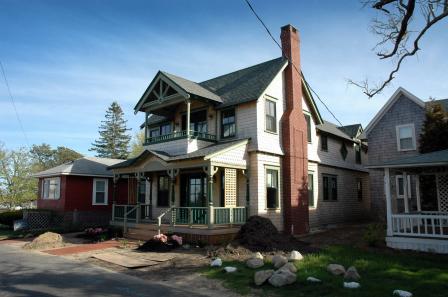
I do think it is critical for neighborhoods to be vigilant and take responsibility for their future well-being. It will be important for residents of these communities to establish home owner associations if they don’t already have them. They need to create covenants to ensure there are safeguards to prevent someone from coming into the community and building an enormous A-Frame glass tent or Quonset hut that doesn’t fit the general character of the neighborhood. Variety is a good thing because it gives character to the community and ensures more expensive homes will blend in visually and economically. This is all part of preserving the future value of your investment and the value of this magical Island we all love to live on.
Monday, April 23, 2007
All Real Estate Is Local, but that has not been the perception?
In David Lereah’s new book, “All Real Estate Is Local”, he references the investment mistakes his Grandpa made by listening to the national news instead of paying attention to ”local influences and activity” He goes on to say, “Whatever the national trends are with regard to real estate – whether they are booming or busting – what really matters is what the market conditions are in your region, town, or neighborhood.” David Lereah is Senior Vice President and Chief Economist of the National Association of Realtors® (NAR).
Starting in 2001 real estate speculation began picking up steam in certain areas of the country that were growing in popularity. These areas were primarily coastal cities on the east and west coast. It would be five years before this trend would run its course. Investors were quick to jump on board with the hope of making a quick buck -- and they did. Properties were selling before a shovel touched dirt or a hammer struck a nail. We saw this in the 80’s here on Martha’s Vineyard when the construction and housing market was out of control, but we learned from that bad experience and won’t let it happen again.
When the press started reporting the news that the Boom was over, they did so by painting a national picture of doom and gloom with a broad brush. We all listened to the reports. Prospective buyers relished the thought of getting a good deal, “a steal”, and regaining control of what had been a so-called seller’s market that had all but shut out everyone except the well-healed from the Vineyard real estate market. Sellers, on the other hand, started to panic but refused to give up their position. They fervently resisted lowering what, in most cases, were overly inflated prices based upon subjective personal opinions instead of factual market price analysis provided by seller agents.
We entered a buyer-seller standoff period where nothing was happening, except at the very top of the market. But even there activity slowed down and sales were few and far between. No one wants to overspend and appear foolish regardless of how much they are worth. The wave of panic continued to build while rolling from coast to coast, and everyone was talking about a “buyer’s market” whether the perception was true or not.
On the Vineyard, sellers continued throwing chum at the market week after week in the form of insignificant price reductions. So like any good bargain shopper, buyers continued to wait, wondering how low the market would go. Personally, from the beginning I saw this as an opportunity for a leveling of the market and never believed the negative hype as it pertained to Martha’s Vineyard. Water seeks its own level and it would just be a matter of time, I thought, before we reached that point.
All of a sudden, but not by surprise, there was a new specter looming on the horizon. Was the housing bubble about to burst? Buyers had been led to believe there was no end in sight for the hot market and prices would just continue climbing. They were drawn into a false sense of security and anticipation of assumed future gains. Greed and some very creative financing products also encouraged buyers to overextend themselves by committing to attractive short-term, low adjustable interest rate loans. This enabled them to get into the market with little or no money down. But in some areas of the country the market suddenly came to a halt and prices started to decline. Frantic buyers not wanting to lose money immediately started canceling new home sales contracts and in many cases forfeiting substantial deposits.
With prices now plummeting by double digit percentages in many popular cities, and adjustable mortgage rates going up as much as double at the first reset, many new home owners found it easier to simply walk away from their homes purchased with up to 100% financed loans they could no longer afford. This was the case in cities like Boston, Cape Cod, Phoenix, Las Vegas, Los Angeles and Ft. Lauderdale where there had been overly zealous growth, but it was not that way throughout the entire country.
On Martha’s Vineyard the rate of appreciation was above average but not even half of what it was in the 1980’s. There were only a handful of speculators here that might have been in jeopardy. The Vineyard has always been a pricey market and that is not by accident. People who “get the Vineyard” are passionate about wanting to live here and make emotional decisions; quite often paying a premium to be part of the unique Vineyard lifestyle.
It was not only the home buyer who was affected by the slowdown in the market. Existing home owners who were courted and vigorously encouraged to take equity out of their existing homes for that dream vacation to Hawaii or that slick new Escalade were finding themselves in an unexpected upside-down or negative amortization position. The news of a threatened foreclosure glut loomed heavily on the horizon --- but once again we should have remembered --- real estate is local.
When a homeowner cannot maintain their mortgage or sell their home to save themselves, the end result is usually foreclosure and over a million home owners in the US are facing that end today. The foreclosure process begins when a borrower is over 30 days late with a mortgage payment. The lender will usually send a letter of notice to the borrower along with notification to the state’s Land Court notifying them of an action to foreclose. This does not imply a fait accompli, as most borrowers are able to work out the loan with the lender before they lose their homes. With prices continuing to decline in some areas, options have become more limited. However, in Massachusetts, the number of foreclosures is not even close to what it was in 1992. Government leaders are now calling for state and federal assistance to subsidize aide to home owners threatened with foreclosure.
Although Martha’s Vineyard is a wonderful and very special place, like all good things, greed can play a major part in pushing the envelope. We experienced a period for many years where everyone thought they had the goose that laid the golden egg. Many properties came on the market for ridiculous prices, both at the very top and at the very bottom of the market. Still, we relied upon the market to have the last word, but the astounding reality was that there was always someone who would pay the price. Today this is changing to a great extent not only because of the perception of a more level playing field or buyer’s market, but also because buyers are choosing to have their own agency representation.
So where are we today? I believe we are at a tipping point in the Martha’s Vineyard real estate market, but it will not be without a little more pain. One of my pet peeves is there are too many substandard, poorly maintained buildings of no important historic significance for sale here that have outlived their economic and functional usefulness. There is an old real estate expression, “underneath it all is the land”, and in many cases that is where the value is --- not what sits on the land. I maintain that many of the 40, 50 and 70 year old structures should be removed and replaced with more attractive energy efficient “Green” construction. Sellers have to realize they can no longer expect to get $400,000 to $500,000 for a property with a dilapidated house or unheated shack, when the value of the land is almost half of that selling price. Buyers need to realize they are not going to be able to “steal” properties. They must have confidence that if they pay a fair price for a property, they will have a solid investment that will appreciate in time, but not overnight.
We have to come to the realization on Martha’s Vineyard that this is not a buyer’s market, but an opportunity for a balanced market. A market where properties are priced fairly and sellers have realistic expectations. However, the lower to middle-end of the market is distorted because we still have a number of sellers who are not realistic or serious about selling their properties; they’re just fishing. Their perception of what their property is worth, albeit uninformed or ill-advised, overrides the facts. There are three phrases I constantly hear that always make me smile: “The seller is motivated”; “The seller doesn’t have to sell”, and “The price is negotiable”. What the heck does all that mean? Does it mean the motivated seller will accept well below market value or the non-motivated seller is firm on the price or will only accept above market value? Does anyone in the market today assume that prices are not negotiable?
The pool of qualified pre-approved buyers at the lower end or entry level of the Martha’s Vineyard real estate market is drying up. Lenders are adopting much stricter guidelines for buyers with limited resources and marginal credit. If you were pre-approved for a loan last year you may not be eligible for that same amount today. A larger down payment may be required and you will most likely not get a loan approval without verifying your income. If you are contemplating a purchase this year, save yourself disappointment and wasted time for everyone by going to a lender and getting pre-approved for a mortgage. Believe me, you are better off knowing your pocketbook will match your expectations. Negotiations are difficult enough today and being pre-approved will strengthen your bargaining position.
I’m the owner of SplitRock Real Estate, an EXCLUSIVE BUYER AGENCY and to paraphrase a statement from a REALTOR® sponsored national ad campaign, real estate is my life. I know my business; I study it and I’m passionate about it. My perspective is unique because I view the market from the buyer’s vantage point, and my goal is always to arrive at a fair deal. I will do my best to protect my buyer clients and will look after their best interests. My task is to educate and counsel my buyer clients so they can make informed decisions they will be comfortable with. I encourage you to begin or continue your real estate education at www.SplitRockRE.com .
Starting in 2001 real estate speculation began picking up steam in certain areas of the country that were growing in popularity. These areas were primarily coastal cities on the east and west coast. It would be five years before this trend would run its course. Investors were quick to jump on board with the hope of making a quick buck -- and they did. Properties were selling before a shovel touched dirt or a hammer struck a nail. We saw this in the 80’s here on Martha’s Vineyard when the construction and housing market was out of control, but we learned from that bad experience and won’t let it happen again.
When the press started reporting the news that the Boom was over, they did so by painting a national picture of doom and gloom with a broad brush. We all listened to the reports. Prospective buyers relished the thought of getting a good deal, “a steal”, and regaining control of what had been a so-called seller’s market that had all but shut out everyone except the well-healed from the Vineyard real estate market. Sellers, on the other hand, started to panic but refused to give up their position. They fervently resisted lowering what, in most cases, were overly inflated prices based upon subjective personal opinions instead of factual market price analysis provided by seller agents.
We entered a buyer-seller standoff period where nothing was happening, except at the very top of the market. But even there activity slowed down and sales were few and far between. No one wants to overspend and appear foolish regardless of how much they are worth. The wave of panic continued to build while rolling from coast to coast, and everyone was talking about a “buyer’s market” whether the perception was true or not.
On the Vineyard, sellers continued throwing chum at the market week after week in the form of insignificant price reductions. So like any good bargain shopper, buyers continued to wait, wondering how low the market would go. Personally, from the beginning I saw this as an opportunity for a leveling of the market and never believed the negative hype as it pertained to Martha’s Vineyard. Water seeks its own level and it would just be a matter of time, I thought, before we reached that point.
All of a sudden, but not by surprise, there was a new specter looming on the horizon. Was the housing bubble about to burst? Buyers had been led to believe there was no end in sight for the hot market and prices would just continue climbing. They were drawn into a false sense of security and anticipation of assumed future gains. Greed and some very creative financing products also encouraged buyers to overextend themselves by committing to attractive short-term, low adjustable interest rate loans. This enabled them to get into the market with little or no money down. But in some areas of the country the market suddenly came to a halt and prices started to decline. Frantic buyers not wanting to lose money immediately started canceling new home sales contracts and in many cases forfeiting substantial deposits.
With prices now plummeting by double digit percentages in many popular cities, and adjustable mortgage rates going up as much as double at the first reset, many new home owners found it easier to simply walk away from their homes purchased with up to 100% financed loans they could no longer afford. This was the case in cities like Boston, Cape Cod, Phoenix, Las Vegas, Los Angeles and Ft. Lauderdale where there had been overly zealous growth, but it was not that way throughout the entire country.
On Martha’s Vineyard the rate of appreciation was above average but not even half of what it was in the 1980’s. There were only a handful of speculators here that might have been in jeopardy. The Vineyard has always been a pricey market and that is not by accident. People who “get the Vineyard” are passionate about wanting to live here and make emotional decisions; quite often paying a premium to be part of the unique Vineyard lifestyle.
It was not only the home buyer who was affected by the slowdown in the market. Existing home owners who were courted and vigorously encouraged to take equity out of their existing homes for that dream vacation to Hawaii or that slick new Escalade were finding themselves in an unexpected upside-down or negative amortization position. The news of a threatened foreclosure glut loomed heavily on the horizon --- but once again we should have remembered --- real estate is local.
When a homeowner cannot maintain their mortgage or sell their home to save themselves, the end result is usually foreclosure and over a million home owners in the US are facing that end today. The foreclosure process begins when a borrower is over 30 days late with a mortgage payment. The lender will usually send a letter of notice to the borrower along with notification to the state’s Land Court notifying them of an action to foreclose. This does not imply a fait accompli, as most borrowers are able to work out the loan with the lender before they lose their homes. With prices continuing to decline in some areas, options have become more limited. However, in Massachusetts, the number of foreclosures is not even close to what it was in 1992. Government leaders are now calling for state and federal assistance to subsidize aide to home owners threatened with foreclosure.
Although Martha’s Vineyard is a wonderful and very special place, like all good things, greed can play a major part in pushing the envelope. We experienced a period for many years where everyone thought they had the goose that laid the golden egg. Many properties came on the market for ridiculous prices, both at the very top and at the very bottom of the market. Still, we relied upon the market to have the last word, but the astounding reality was that there was always someone who would pay the price. Today this is changing to a great extent not only because of the perception of a more level playing field or buyer’s market, but also because buyers are choosing to have their own agency representation.
So where are we today? I believe we are at a tipping point in the Martha’s Vineyard real estate market, but it will not be without a little more pain. One of my pet peeves is there are too many substandard, poorly maintained buildings of no important historic significance for sale here that have outlived their economic and functional usefulness. There is an old real estate expression, “underneath it all is the land”, and in many cases that is where the value is --- not what sits on the land. I maintain that many of the 40, 50 and 70 year old structures should be removed and replaced with more attractive energy efficient “Green” construction. Sellers have to realize they can no longer expect to get $400,000 to $500,000 for a property with a dilapidated house or unheated shack, when the value of the land is almost half of that selling price. Buyers need to realize they are not going to be able to “steal” properties. They must have confidence that if they pay a fair price for a property, they will have a solid investment that will appreciate in time, but not overnight.
We have to come to the realization on Martha’s Vineyard that this is not a buyer’s market, but an opportunity for a balanced market. A market where properties are priced fairly and sellers have realistic expectations. However, the lower to middle-end of the market is distorted because we still have a number of sellers who are not realistic or serious about selling their properties; they’re just fishing. Their perception of what their property is worth, albeit uninformed or ill-advised, overrides the facts. There are three phrases I constantly hear that always make me smile: “The seller is motivated”; “The seller doesn’t have to sell”, and “The price is negotiable”. What the heck does all that mean? Does it mean the motivated seller will accept well below market value or the non-motivated seller is firm on the price or will only accept above market value? Does anyone in the market today assume that prices are not negotiable?
The pool of qualified pre-approved buyers at the lower end or entry level of the Martha’s Vineyard real estate market is drying up. Lenders are adopting much stricter guidelines for buyers with limited resources and marginal credit. If you were pre-approved for a loan last year you may not be eligible for that same amount today. A larger down payment may be required and you will most likely not get a loan approval without verifying your income. If you are contemplating a purchase this year, save yourself disappointment and wasted time for everyone by going to a lender and getting pre-approved for a mortgage. Believe me, you are better off knowing your pocketbook will match your expectations. Negotiations are difficult enough today and being pre-approved will strengthen your bargaining position.
I’m the owner of SplitRock Real Estate, an EXCLUSIVE BUYER AGENCY and to paraphrase a statement from a REALTOR® sponsored national ad campaign, real estate is my life. I know my business; I study it and I’m passionate about it. My perspective is unique because I view the market from the buyer’s vantage point, and my goal is always to arrive at a fair deal. I will do my best to protect my buyer clients and will look after their best interests. My task is to educate and counsel my buyer clients so they can make informed decisions they will be comfortable with. I encourage you to begin or continue your real estate education at www.SplitRockRE.com .
Wednesday, April 18, 2007
Martha’s Vineyard is Living On The Edge
Living on Martha’s Vineyard we are all used to the threat of seasonal hurricanes and a steady flow of Nor’easters during the year. We take them pretty much in stride assuming that the weather forecasters are just creating drama and nothing much will happen. The last real storm damage anyone remembers was during Hurricane Bob and the Halloween Nor’easter in 1991. Actually the Halloween storm did more damage to the beaches and dunes than Bob did.
Once again a Nor’easter has slowly crept across the middle of the country and up the eastern seaboard hovering over the Martha’s Vineyard shoreline for days. Although the body of the storm moved out into the Atlantic, the effects of the storm are still lingering with high winds, rough seas and unusually high tides continuing an assault on our beaches and dunes. The final report card for this storm is still being written but severe errosion has been observed along the northwest coast and the Lucy Vincent Beach area.
Here is one report on the damage sustained to one of the most fragile and beautiful areas we lovingly covet and try to protect, albeit this is also viewed as a positive phenomena.
(Click here to view >) Norton Point Beach breached; crashing seas open channel

Once again a Nor’easter has slowly crept across the middle of the country and up the eastern seaboard hovering over the Martha’s Vineyard shoreline for days. Although the body of the storm moved out into the Atlantic, the effects of the storm are still lingering with high winds, rough seas and unusually high tides continuing an assault on our beaches and dunes. The final report card for this storm is still being written but severe errosion has been observed along the northwest coast and the Lucy Vincent Beach area.
Here is one report on the damage sustained to one of the most fragile and beautiful areas we lovingly covet and try to protect, albeit this is also viewed as a positive phenomena.
(Click here to view >) Norton Point Beach breached; crashing seas open channel

Friday, March 30, 2007
Should Second-homes be subjected to a Lodging Tax?
On February 15th I commented on a proposed Lodging Tax that would affect second-home rentals on Martha's Vineyard and Cape Cod. People who depend upon the rental income of their second homes to partially offset their carrying costs, would have to pass along the tax to their tenants in order to make their numbers work. The rental rates on Martha's Vineyard are already high. We have to ask ourselves, at what point will vacationers start to look elsewhere for better values? For people dreaming of owning a home on Martha's Vineyard and relying upon rental income as part of the purchase equation this tax would deliver a real blow to the process. Here is an update on the debate taken from an editorial at CapeBusiness.net:
"Should second-home rentals be taxed? Some things to consider as the debate intensifies over whether to tax summer rentals:
"Yes, it would level the playing field. Latest numbers show a waning occupancy rate for hotels and motels in the summer, surely a result of competition from summer home rentals.
"But what happens if second-home owners dependent on that income find themselves faced with as much as a 9 percent tax increase? For them, it is seeing their property tax almost double. This on top of rising energy costs, insurance coverage increases and a harder time renting their homes due to an oversupply of rentals. At what point will second-home owners decide to put their home on the market because the economics don’t work – especially since they no longer can expect double-digit price appreciation?
"And if those houses go on the market, what impact will that have on all house prices, including those owned by primary-home owners?
"Will municipalities worried about waning occupancy taxes find that scenario better?
"Now add the fact that second-home owners spend more on average than full-time residents – according to some studies, 1.6 times more. If they bail out in the face of rising overhead costs, what other businesses on the Cape – from furniture stores to restaurants – will suffer?
"The reality is that the tax issue transcends tourism and municipal budgets. It is very much a complex macroeconomic issue with many moving parts. Look at it one-dimensionally and we are sure to suffer unintended consequences."
"Should second-home rentals be taxed? Some things to consider as the debate intensifies over whether to tax summer rentals:
"Yes, it would level the playing field. Latest numbers show a waning occupancy rate for hotels and motels in the summer, surely a result of competition from summer home rentals.
"But what happens if second-home owners dependent on that income find themselves faced with as much as a 9 percent tax increase? For them, it is seeing their property tax almost double. This on top of rising energy costs, insurance coverage increases and a harder time renting their homes due to an oversupply of rentals. At what point will second-home owners decide to put their home on the market because the economics don’t work – especially since they no longer can expect double-digit price appreciation?
"And if those houses go on the market, what impact will that have on all house prices, including those owned by primary-home owners?
"Will municipalities worried about waning occupancy taxes find that scenario better?
"Now add the fact that second-home owners spend more on average than full-time residents – according to some studies, 1.6 times more. If they bail out in the face of rising overhead costs, what other businesses on the Cape – from furniture stores to restaurants – will suffer?
"The reality is that the tax issue transcends tourism and municipal budgets. It is very much a complex macroeconomic issue with many moving parts. Look at it one-dimensionally and we are sure to suffer unintended consequences."
Saturday, March 17, 2007
Edgartown Adopts Strict BOH Regulations in hopes of Protecting Sengekontacket Pond
On March 7th, I commented on this article.
Click here to follow link > Septic Ban Points to Pond Protection
I spoke with Matt Poole the day before the Board of Health meeting regarding certain concerns I had about the proposed new health regulations governing Ocean Heights and Arbutus Park. Matt was actually working on completing the draft for the new regulation when I interrupted him. I told him I felt this could present a real hardship to current property owners who may not be able to afford the cost of possible mandatory waste water upgrades as outlined by the new regulation. Those with vacant lots may no longer be able to afford construction costs on their lots with the added expense of new utility systems. Matt said, in so many words, anyone who owns or purchases property in these areas should be able to afford the hookups. He may be right because there have been some pretty impressive houses going up in these communities lately.
Ultimately, this will be a good thing but I think it will be very interesting to see how the new regulations create a paradigm shift in Ocean Heights and Arbutus Park. I agree installing enhanced systems with the thought of evading the new hookup and as a permanent solution would be ill-advised because I believe the enhanced systems will have to be abandoned eventually. In my opinion enhanced systems are not attractive looking and I think they’re a band-aid for what has been and is increasingly becoming more and more a very serious problem -- the pollution of Sengekontacket Pond.
I think it’s unfortunate that Edgartown does not focus more on existing problems in developed neighborhoods before it allows major new construction projects in equally fragile areas like the Edgartown Great Pond. We need to control and limit density here, not increase it. This Island is already choking; we don’t want it to lose its vital signs.
Click here to follow link > Strict Regulations to Protect Sengekontacket Pond
Click here to follow link > Septic Ban Points to Pond Protection
I spoke with Matt Poole the day before the Board of Health meeting regarding certain concerns I had about the proposed new health regulations governing Ocean Heights and Arbutus Park. Matt was actually working on completing the draft for the new regulation when I interrupted him. I told him I felt this could present a real hardship to current property owners who may not be able to afford the cost of possible mandatory waste water upgrades as outlined by the new regulation. Those with vacant lots may no longer be able to afford construction costs on their lots with the added expense of new utility systems. Matt said, in so many words, anyone who owns or purchases property in these areas should be able to afford the hookups. He may be right because there have been some pretty impressive houses going up in these communities lately.
Ultimately, this will be a good thing but I think it will be very interesting to see how the new regulations create a paradigm shift in Ocean Heights and Arbutus Park. I agree installing enhanced systems with the thought of evading the new hookup and as a permanent solution would be ill-advised because I believe the enhanced systems will have to be abandoned eventually. In my opinion enhanced systems are not attractive looking and I think they’re a band-aid for what has been and is increasingly becoming more and more a very serious problem -- the pollution of Sengekontacket Pond.
I think it’s unfortunate that Edgartown does not focus more on existing problems in developed neighborhoods before it allows major new construction projects in equally fragile areas like the Edgartown Great Pond. We need to control and limit density here, not increase it. This Island is already choking; we don’t want it to lose its vital signs.
Click here to follow link > Strict Regulations to Protect Sengekontacket Pond
Wednesday, March 07, 2007
The times they are a changing --- on Martha's Vineyard
Septic Ban Points to Pond Protection is the title of a recent article in the Vineyard Gazette that outlines a new regulation affecting vacant land owners in Ocean Heights and Arbutus Park.
Water pollution is the #1 factor that’s going to limit the density and development of the Vineyard in all geographic areas. We’ve known this for years, and you don’t have to be Nostradamus to have seen it coming.
Last year the town of Edgartown implemented a “Wastewater Department Bedroom Regulation” that stated simply (?) will limit the number of bedrooms as follows: “Existing and future lots shall be allowed four (4) bedrooms for the first ten thousand (10,000) square feet of lot area.” The regulation goes on to outline guidelines for additional bedrooms, but I think you get the idea.
Our aquifer is essentially one large interconnected underground lake that supplies the entire Island and our numerous tidal ponds are very fragile. It doesn’t take a genius to figure out we’re at a tipping point. All you have to do during the summer when driving along Island byways and passing any number of these ponds is hang your head out the window of your car and sniff the air. Every year the BOH closes certain ponds at one point during the summer for recorded high fecal levels. That’s scary.
Read this article and keep in mind that buying land is going to require more than just a promise and assumption that you can build what you want on the land, even if the current zoning bylaws say you can. Rules are changing every day and I bet you’re going to see a great many lots in the Ocean Heights area coming on the market at fire sale prices, or being purchased by one buyer, combined, engineered and offered for sale anew at premium prices. I know of one group of lots in that area right now, not in MLS, available for $750,000.
Click here to follow link > Septic Ban Points to Pond Protection
Water pollution is the #1 factor that’s going to limit the density and development of the Vineyard in all geographic areas. We’ve known this for years, and you don’t have to be Nostradamus to have seen it coming.
Last year the town of Edgartown implemented a “Wastewater Department Bedroom Regulation” that stated simply (?) will limit the number of bedrooms as follows: “Existing and future lots shall be allowed four (4) bedrooms for the first ten thousand (10,000) square feet of lot area.” The regulation goes on to outline guidelines for additional bedrooms, but I think you get the idea.
Our aquifer is essentially one large interconnected underground lake that supplies the entire Island and our numerous tidal ponds are very fragile. It doesn’t take a genius to figure out we’re at a tipping point. All you have to do during the summer when driving along Island byways and passing any number of these ponds is hang your head out the window of your car and sniff the air. Every year the BOH closes certain ponds at one point during the summer for recorded high fecal levels. That’s scary.
Read this article and keep in mind that buying land is going to require more than just a promise and assumption that you can build what you want on the land, even if the current zoning bylaws say you can. Rules are changing every day and I bet you’re going to see a great many lots in the Ocean Heights area coming on the market at fire sale prices, or being purchased by one buyer, combined, engineered and offered for sale anew at premium prices. I know of one group of lots in that area right now, not in MLS, available for $750,000.
Click here to follow link > Septic Ban Points to Pond Protection
Thursday, February 15, 2007
Lodging Tax will effect Martha’s Vineyard Vacation Rental Homes
I’m an exclusive buyer broker on Martha’s Vineyard, so I don’t list property for sale. I also don’t handle any rental properties. Recently I received emails from several of my clients and Island neighbors expressing their amazement and supreme displeasure with a proposed bill that would levy a 5% hotel/motel room tax on all private rentals and timeshares.
This seems to me like an outrageous idea, especially because Martha’s Vineyard has always been a vacation destination and not everyone can afford to own a home here. Most Island lovers that find a way to own their dream home on Martha’s Vineyard do so by offsetting their expenses by renting a portion of the year. Only a very small percentage uses their properties like “temporary hotels”. According to a recent article in the Cape Cod Times, “homes, apartments, condominiums and timeshares that are rented for 90 consecutive days or less” would be subject to the proposed tax. According to this legislative mindset, “private homeowners will simply pass the tax on to the visitors. And if the tax is applied equally across the state, visitors will not head to the Berkshires instead of the Cape.” That may all sound well and good, but when you take into consideration the average vacation stay is two weeks with weekly rates starting at about $2,500 with many rentals close to beaches and towns priced well over $4,500 a week, and even into the tens of thousands, this is going to be a very hefty tax. Rental agencies charge between 10% and 20% for their services and most of them really earn it. So, you have to add that into the mix.
The article puts forth the claim that “what’s particularly unfair is that the people who rent these private homes still demand all the services that residents deserve, such as beach and road maintenance and police and rescue, but are paying no taxes to support the local services”. But they don’t take into consideration that these people pay their taxes just like year round residences; however, they don’t occupy their homes for as long as six months out of the year.
Here’s the Cape Cod Times article being referenced along with Chapter 64G under Title IX. Taxation. The proposed amendment to this law reads as follows:
“SECTION 1: Chapter 64G shall be amended by adding the following section:
“Section 13. Any city or town which accepts or has accepted the provisions of section 3A of this chapter may, by a separate vote, accept the provisions of this section and expand the imposition of said room occupancy excise tax to include other transient accommodations. Other transient accommodations is defined as any vacation or leisure accommodation, including but not limited to apartment, single or multiple family housing, cottage, condominium and timeshare unit, which is rented to occupants for a period of ninety consecutive days or less regardless of whether such use and possession is as a lessee, tenant, guest or licensee.
“For the purposes of this section, any definition in section 1 of this chapter, where the terms “room or rooms in a bed and breakfast establishment, hotel, lodging house or motel” are used shall be deemed to include the term, “other transient accommodations”
“In the case of transient accommodations, the owner of the apartment, single or multiple family housing, cottage, condominium or timeshare unit, shall be responsible for assessing, collecting, reporting, and paying over the tax and reporting as described for operators in sections 3, 4, 5, 6, and 7A, and shall be liable in the same manner as operators in section 7B.”
This seems to me like an outrageous idea, especially because Martha’s Vineyard has always been a vacation destination and not everyone can afford to own a home here. Most Island lovers that find a way to own their dream home on Martha’s Vineyard do so by offsetting their expenses by renting a portion of the year. Only a very small percentage uses their properties like “temporary hotels”. According to a recent article in the Cape Cod Times, “homes, apartments, condominiums and timeshares that are rented for 90 consecutive days or less” would be subject to the proposed tax. According to this legislative mindset, “private homeowners will simply pass the tax on to the visitors. And if the tax is applied equally across the state, visitors will not head to the Berkshires instead of the Cape.” That may all sound well and good, but when you take into consideration the average vacation stay is two weeks with weekly rates starting at about $2,500 with many rentals close to beaches and towns priced well over $4,500 a week, and even into the tens of thousands, this is going to be a very hefty tax. Rental agencies charge between 10% and 20% for their services and most of them really earn it. So, you have to add that into the mix.
The article puts forth the claim that “what’s particularly unfair is that the people who rent these private homes still demand all the services that residents deserve, such as beach and road maintenance and police and rescue, but are paying no taxes to support the local services”. But they don’t take into consideration that these people pay their taxes just like year round residences; however, they don’t occupy their homes for as long as six months out of the year.
Here’s the Cape Cod Times article being referenced along with Chapter 64G under Title IX. Taxation. The proposed amendment to this law reads as follows:
“SECTION 1: Chapter 64G shall be amended by adding the following section:
“Section 13. Any city or town which accepts or has accepted the provisions of section 3A of this chapter may, by a separate vote, accept the provisions of this section and expand the imposition of said room occupancy excise tax to include other transient accommodations. Other transient accommodations is defined as any vacation or leisure accommodation, including but not limited to apartment, single or multiple family housing, cottage, condominium and timeshare unit, which is rented to occupants for a period of ninety consecutive days or less regardless of whether such use and possession is as a lessee, tenant, guest or licensee.
“For the purposes of this section, any definition in section 1 of this chapter, where the terms “room or rooms in a bed and breakfast establishment, hotel, lodging house or motel” are used shall be deemed to include the term, “other transient accommodations”
“In the case of transient accommodations, the owner of the apartment, single or multiple family housing, cottage, condominium or timeshare unit, shall be responsible for assessing, collecting, reporting, and paying over the tax and reporting as described for operators in sections 3, 4, 5, 6, and 7A, and shall be liable in the same manner as operators in section 7B.”
Monday, February 05, 2007
There’s no place like home, and no home is completely safe
Many of us own homes in areas considered to be living on the edge of ecological, topographical and geological hazards. Despite warnings based upon science and past history we keep flocking to these areas and paying the price because the view and lifestyle outweigh the risks. Martha’s Vineyard is one of those areas, hanging out in the Atlantic detached from the main land and in the flight path of hurricanes and Nor’easters. If you live in one of these so-called risk areas in time you will probably be touched by one of nature's phenomenas, but what about if you play it safe?
Some people are more cautious and look for what they hope will be a safe haven. There are no guarantees in life no matter how cautious you are or where you choose to call home. Two beliefs I try to live by are: You get what you most try to resist; make decisions coming from love not fear.
(Click here to follow link >) This was our Martha's Vineyard
Some people are more cautious and look for what they hope will be a safe haven. There are no guarantees in life no matter how cautious you are or where you choose to call home. Two beliefs I try to live by are: You get what you most try to resist; make decisions coming from love not fear.
(Click here to follow link >) This was our Martha's Vineyard
Tuesday, January 30, 2007
The Housing Bank Bill -- If at first you don't succeed try again
The MV Times News In Brief section published an editorial regarding the controversial Housing Bank. This is not about a for-rent project; it is about affordable property ownership for lower income residents of Martha's Vineyard.
Housing bank bill is re-filed on Beacon Hill
“Hoping for success the second time around, backers of legislation designed to create a fund to be used to support the creation of affordable housing on Martha's Vineyard learned that Senator Robert O'Leary, a key supporter, filed the bill on Jan. 9.
“Senate Bill #781 would impose a one percent fee, paid by the seller, on real estate sales. The first $750,000 of each sale would be exempt. Modeled closely after the Land Bank, the bill would create a housing organization that would be self-funded and award money to a variety of housing initiatives.
“Last summer the legislation, which was combined with a similar effort to create a Nantucket housing bank, passed the Senate but went down to defeat in the House where it was opposed by real estate interests.
“The legislation filed this month no longer contains any reference to Nantucket. The Martha's Vineyard Community Housing Bank Coalition, a group created to push the bill through the legislature, is optimistic that separating the Vineyard from Nantucket will further its chances.
“A copy of the bill is available on the coalition's web site at www.mvchb.org.”
Housing bank bill is re-filed on Beacon Hill
“Hoping for success the second time around, backers of legislation designed to create a fund to be used to support the creation of affordable housing on Martha's Vineyard learned that Senator Robert O'Leary, a key supporter, filed the bill on Jan. 9.
“Senate Bill #781 would impose a one percent fee, paid by the seller, on real estate sales. The first $750,000 of each sale would be exempt. Modeled closely after the Land Bank, the bill would create a housing organization that would be self-funded and award money to a variety of housing initiatives.
“Last summer the legislation, which was combined with a similar effort to create a Nantucket housing bank, passed the Senate but went down to defeat in the House where it was opposed by real estate interests.
“The legislation filed this month no longer contains any reference to Nantucket. The Martha's Vineyard Community Housing Bank Coalition, a group created to push the bill through the legislature, is optimistic that separating the Vineyard from Nantucket will further its chances.
“A copy of the bill is available on the coalition's web site at www.mvchb.org.”
Morgan Woods affordable housing project on Martha's Vineyard nears completion
It’s been about nine years since the Pennywise Path affordable housing project was conceived and set into motion. As the construction progressed and is now nearing completion, the decision has been made to name the project Morgan Woods, appropriately after the former Edgartown affordable housing committee chairman, Fred B. “Ted” Morgan, who lead the project from the very beginning,. This community experiment has been and will be closely watched by all Island towns to gauge its long term success, because there has never been a rental community on the Island of this scale.
I found the following articles informative and thought I would bring them to your attention.
Morgan Woods, a whole new village of attractive homes
The Vineyard's first significant, municipally developed affordable rental housing for low and moderate income residents
I found the following articles informative and thought I would bring them to your attention.
Morgan Woods, a whole new village of attractive homes
The Vineyard's first significant, municipally developed affordable rental housing for low and moderate income residents
Subscribe to:
Posts (Atom)