Showing posts with label Buyer Agency. Show all posts

Saturday, February 22, 2014

Chit-Chatting Around the Water Cooler

Remember the home inspection story in my last blog about the home owner who lost his lawsuit because he did not speak up when he suspected a problem at the home inspection?  Well, here is another story that could have gone to court, and maybe should have.

I was in the grocery store grabbing some Chobani Greek yogurt at the dairy case when I bumped into my home inspector.  We were standing their chit chatting when we felt the heat from someone moving around us on the perimeter.   We stopped and acknowledged this person, who immediately queried, “Are you the building inspector” he said to my friend.  Okay, we knew what he meant and after making the proper introduction this person proceeded to tell the building inspector his tale.

Remember the home you inspected for me?  I knew right away this was not going to be a happy tale.  Although he did preface what was to follow by saying he loves the house (now) and is perfectly happy with it.  The fireplace chimney had cracks everywhere and it leaked like a sieve.  It had to be torn down and rebuilt to the tune of $25,000. 

I asked this person if he noticed the problem before he bought the house. “Nope”.  Did your buyer agent ask the seller or the seller agent if they knew anything that was or would be a problem? “Nope”.  Did your buyer agent notice anything or say anything? “Nope”.

The buyer actually defended his unfortunate circumstance by explaining to ME that  Massachusetts is a ‘Buyer Beware State' and that unlike his home state seller's in Massachusetts are not required to fill out a Seller’s Description of Property form, and then admitting that no one asked the appropriate questions. 
(Side note:  Sellers on the Cape do fill out Seller's Description of  Property forms) 

At that point my question should have been, if you are so darn happy after hiring someone you expected to represent your best interests, paying for a professional home inspection, and then after you closed on the home discovering a major defect that ended up costing you $25,000, but you are telling us you happy and in love with the house, why did you interrupt our conversation?  This poor guy might have had a case against the inspector or his agent, or the seller agent if he had been an informed buyer with competent assistance.  Granted, I don’t know all the facts but if it were me I sure would be pissed and looking to see if I had recourse.

As a disclosure, I will tell my clients that Home Inspector’s cannot see every single thing there is to see.  Some inspectors will issue the same disclosure as part of their contract. It is important to remember that real estate licensees are not home inspectors, builders or engineers. However, as with the mold and rot case I reported on, where there is smoke there is fire and in cases like the fractured chimney I would bet you there was a lot of smoke.  And besides, if a buyer has concerns they can always bring a contractor or engineer to review the report, do specialized testing and look at the house they are buying.  I always say, the more the merrier and the more eyes the better – except around the water cooler, or at the dairy case.

Saturday, May 05, 2012

The Price Is Right – Or Is It?

Many of us who own homes have painfully watched the equity we had in our homes dwindle and in many cases completely disappear. The WSJ reported recently “More than one-third of all homeowners have less than 25% equity, including 15% that are underwater, meaning their homes are worth less than what they owe.” Real estate professionals watched their businesses all but dry up unless they were willing to retool and start trading on other people’s misfortune during one of the longest deepest housing market declines in history. Believe it or not it has been six long years since the experts admitted that values were declining. Many of us in the business smelled the smoke in 2005.

Markets in some parts of the country started to crumble sooner than others but here on Martha’s Vineyard I would say we were about six months behind the first wave. Smart investors saw the end was coming and immediately pulled back taking a wait and see position; they knew that the Vineyard was not immune from economic fluctuations and it would be just a matter of time. Even so others kept buying at the top of the market. Sure enough, that wave finally crashed into our shores full strength and by 2007 our market practically came to a standstill.

Today we are hearing even after many false starts, unequivocally the bottom of the market has been reached with prices rolled back in line with 2002 – and adjusting for inflation as far back as 1998. Once again I think we are going to be late to the dance, but this time it will be on the upswing. I would suggest that we are about six months away from reaching our bottom on Martha’s Vineyard. I think we will still see further price reductions in some areas and classifications while in other areas and classifications prices are starting to inch up; not by much, maybe two percent over the next 12 months.

One reason we have not hit bottom here is, instead of our inventory being absorbed more properties come on the market every week. It is true that many of those new properties were on the market last year or two or three years before and they are simply being reintroduced, but the inventory is not going down, although in some cases the asking prices of those properties are going down. Even so there are still many home owners here who ‘don’t have to sell’, and they continue to resist realistically pricing their properties which leads to confusion in the market.

I was reading something the other day that was promoted as being the results of a survey asking the question ‘what does it take to get buyers to close?’ – ‘close’ meaning to buy. The list consisted of 5 concerns: Not having to do a lot of work before a new owner can move in; having a large enough outdoor space for recreation and privacy; being in a safe neighborhood environment, being comfortable with the amount of the mortgage payment and knowing they can make that mortgage payment, and last but not least, knowing they are paying the right price for the property. This was the one item of buyer concern that I took issue with. Why? Because according to the survey, the way a buyer determines that they are getting a good deal is by “looking at the percentage and actual dollar drop from the original price.” Is it really that simple? Are buyers really that naive? If that price differential was the only barometer buyers use to determine if they are getting a good price then they still haven’t figured out the seller’s game and the seller’s win.

I physically inspect many new properties every week and I follow the market here on Martha’s Vineyard like a hawk. I have developed a keen sense for value over the twenty plus years I have been in this business and I can tell when a property is overpriced. Nine out of ten times when I ask a seller agent who priced one of those properties that I consider to be overpriced, the answer is ‘the seller’. The property is reluctantly listed at that inflated price with one agreed upon caveat; if it does not sell within two weeks or thirty days the price will be reduced. It may not be reduced to the price initially recommended by the seller agent but the discounting will begin – and I will continue. We all know it.

So you tell me, if you are following a property and by doing the math you determine that the price has been reduced by 40% from its initial asking price and that initial asking price was 30% above where it should have been priced in the beginning would you still be as excited?

I know determining or understanding pricing here on Martha’s Vineyard can be very confusing. There are so many factors that figure in to valuating properties on this Island that it can make your head spin. There is the cachet associated with each town – and there are six towns. There is the cachet of the location, be it water front, water view, in-town, etc. All of these things have an effect on pricing, but what should not have an effect on pricing is the seller’s opinion; they know the least about market values.

I tell my clients that purchasing a property on Martha’s Vineyard ultimately comes down to making an emotional decision, but I believe my job is to get my clients as close as possible to a realistic number so they feel comfortable that the price is right.

Saturday, April 28, 2012

Bidding Wars Are Back; Next Stop Martha's Vineyard

The headline in the Wall Street Journal reads Home Buyers Find Bidding Wars Are Back

I’ve been cautioning Buyers that this will be the natural evolution of a market reversal and now it is being reported in the Journal. Although the focus is on the states that were hit the hardest from California to Florida, and I have said that Martha’s Vineyard lagged behind when the bubble burst and it will lag behind in the recovery, bidding wars are coming.

Actually, there have already been some bidding wars for the better properties but there is still a lot of inventory to choose from. Once the inventory starts to be absorbed and prices are still at their lowest point in years there will be a whole lot of competition. Buyers who say they are not going to engage in a bidding war may not have a choice if they really want to be here and not one of the classic ‘would have, should have’ club.

Sunday, January 24, 2010

Is Your Real Estate Agent a Spy?

Is your agent a spy? What kind of question is that; it's an important question spawned by the constant controversy and confusion about AGENCY. Who does an agent represent and how do they represent them? The answer to that question can mean thousands of dollars in or out of a buyer's pocket.

I try my best to illustrate the nuances and various types of Agency to consumers on my website, but no matter how I explain the differences, I find most people just don’t get it. However, I really don’t blame them because it is the real estate industry that prefers to keep the smoke screen smoldering to allow for maximum personal gain.

The organization I belong to, The National Association of Exclusive Buyer Agents (NAEBA), continues to lobby for a clearer definition or distinction and separation between those agents that proclaim loudly that they can represent buyers as exclusive buyer agents, yet under their breath slide in the disclaimer or, more appropriately, the caveat, “with the right to transition to dual agency”. That is where the true distinction lies and dual agency is the problem. Attorneys and those in the know think dual agency is a double standard and fertile ground for suspicion and potential favoritism ultimately resulting in litigation. Some states already prohibit the practice of dual agency.

I was reading an article in a trade news publication where a consumer was buying a home and wanted to know how the process would work if the home she was interested in was being offered by a real estate agent who would be working as what the buyer ironically called a “double” agent? In other words, working for both the buyer and the seller. What was really interesting was the choice of words since what she was talking about was a “dual” agent. Subconsciously, she viewed the agent as a double agent. The definition of double agent is “A person pretending to work as a spy for one government (company, etc.) while actually working as a spy for another government (company, etc.).

To pull this back into the real estate vernacular let’s look at this as what is called single-agent dual agency, that being a relationship where one agent represents (?) both the buyer and the seller in the same transaction. That agent can no longer offer the same fiduciary responsibilities to either party as if they were representing one exclusively. The dual agent cannot provide Undivided Loyalty. This is an important point because as a client fiduciary an agent representing a buyer or a seller exclusively is sworn to treat the client’s best interests above their own. Other obligations that cannot be met in a dual agency arrangement are Obedience, Reasonable Care and Diligence and Full Disclosure. The dual agent is required not to disclose any confidential information about both parties. But let me ask you this; in 99% of cases, who do you think the (seller) agent has had the longer term relationship with? You, the buyer or the seller they have the listing agreement with? As a buyer, did you tell your agent the maximum amount you are willing to pay for the property or any other tidbits you would not want to the seller to know about you? Do you think the seller told their agent what their bottom line is or why they are selling? If the agent divulges any of that privileged confidential information without authorization, it is an actionable offense. There is one important point to note and that is that you as a buyer have the right to say no to dual agency when signing an exclusive buyer agency agreement, but that means your buyer agent cannot show you properties listed by their broker agency. The same holds true for a seller.

Most people entering into the Martha’s Vineyard real estate market do not live here and are usually from another part of the country. They know nothing about this market and if they are wise they realize they will need help, not just with looking for the right property or formulating a negotiation strategy, but most importantly with all the due diligence that is essential between the Offer to Purchase and the day of Closing. They need to be exclusively represented 100% of the time.

NAEBA continues to advocate for a clearer explanation of the differences so the public can be better protected. I was speaking to a web advertising sales representative yesterday and asked him why they cannot change the category headings in the real estate agency listing section to read SELLER AGENCIES and BUYER AGENCIES, instead of SALES AGENCIES and BUYER AGENCIES. Wouldn’t that make a little more sense? I doubt we will ever see two distinct categories --- BUYER AGENCIES and EXCLUSIVELY BUYER AGENCIES, because the National Association of REALTORS® continues to allow for the oxymoron labeled as Exclusive Buyer Representation with the right to transition to Dual Agency, but Brokers who believe in my business model will continue to educate the public about the advantages of being represented “Exclusively”.

Saturday, September 19, 2009

Happy Days Are Here Again, but For Whom?

I take my responsibility as an EXCLUSIVE buyer’s advocate very seriously. I have been saying for many months, now is the time to get into the market, but very few people listened.

The recover in the housing market, not only in Massachusetts, in many parts of the country has occurred faster than we thought it would. My concern is that the market does not understand the new dynamic and that will create discontent and an unreasoned lack of agreement between buyers and sellers.

Now that the summer season has officially ended we are seeing a deluge of properties coming onto the market For those sellers who wanted to spend one more season in their Island homes before they put them on the market, the time has come and that is why we are seeing the appearance of some really nice properties.

And for some who have been suffering the discomfort of their evaporated portfolios, their hope for the kind of seasonal rental income that would support their vacation homes until next summer, that income may not have materialized due to the soft summer rental market, so those properties are now for sale.

For property owners who were smart enough to refrain from cluttering the inventory until the market showed signs of recovery because they were not distressed and did not have to sell; they are being induced to test the waters again. Their reemergence is fueled by a pervasive attitude that the economy appears to be improving, along with statistics to support the fact that the bottom has generally come and gone.

“The percentage of listings with price reductions declined slightly from July to August, and when sellers did slash their asking price they made smaller reductions”, according to a national study by Zip Realty.

In another study done by Zillow.com comparing listing prices to selling prices during July, “U.S. homebuyers paid 3.3 percent less than list price on average, down from 3.5 percent in June and 4.6 percent in January”.

Although we are seeing an apparent rush to market on both sides, the fact is buyers can no longer assume owners with properties for sale are highly motivated, In fact, we have been at the bottom of the market for a while now and the horizon is clearly brighter for sellers than it has been in the last 5 years. I received this email from a local bank the other day:

“Our mortgage staff reports that there are a lot of inquiries, a lot of requests for prequalifications, and applications have begun to pick up…all of this is certainly a good sign that the market is a "happening" place. People are obviously past the point where they are just perusing the real estate guide and trying to figure out just how low they can convince a seller to go…..this rate reduction should be a further spur to deals being made. We all wish you the best of luck this fall…to paraphrase my favorite Irish saying, ‘May the wind always be at your backs from now on!!’"

Here is positive spin demonstrating that the region shows signs of rebound.

The real estate market cannot be rated as a good or a bad market because what is good for one can be bad for another. For the last 3 years it has been considered bad for sellers because no one was buying, yet if a buyer decided to make a purchase, the market was good for them. I think we can all agree the recession has bottomed out and with interest rates still historically low --- under 5%, and with no immediate signs of inflation; this is still an excellent time for buyers to take advantage of once in a lifetime opportunities. But it is also good for sellers. Sellers are no longer feeling as though they are being thrown to the wolves. The market is starting to balance out and sellers are feeling more hopeful and empowered.

In order for you as a buyer to be successful you need to adjust your thinking a little bit and keep your eye on the prize --- a home on Martha’s Vineyard.

1) You are no longer in total control so your expectations of ‘take no prisoners’ will no longer work.

2) You will no longer be able to present a litany of demands to sellers and expect them to acquiesce. You need to be reasonable and willing to leave something on the table --- choose your fights.

3) You have to look at your investment opportunity from the standpoint that the market has gone down anywhere from 10 to as much as 30 percent in some areas and in some price lines. So no matter what, you have to realize you are making a much better purchase than you would have within the last 4-5 years.

4) You have to be willing to negotiate, be patient, be flexible and in the end remember that Martha’s Vineyard is a lifestyle, an emotional decision as well as one of the better long term investments you will make. This Island is a finite commodity and it is not growing any larger.

For buyers today what is most important is to have good representation by a skilled negotiator. Someone who is knowledgeable about the entire market, someone who will thoroughly investigate all details of the property you select so you are fully informed and not surprised later on by things you did not know about. You want someone who will represent you 100% throughout the process and be there for you afterward. You want an exclusive buyer agent. You want SplitRock Real Estate, LLC.

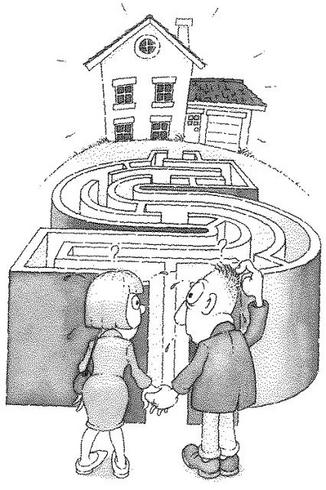
Entering into the home buying process is like wandering through a corn maze, you can make a lot of wrong turns if you are without a knowledgeable guide who knows the way.


Friday, February 13, 2009

Agency Disclosure Follow-up for Buyers Only on Martha’s Vineyard

In my recent Blog titled “For Buyers Only on Martha’s Vineyard” I spoke about Agency Disclosure. I want to revisit the subject and add some statistical numbers tabulated by the National Association of REALTORS® (NAR).

Making the decision to be an Exclusive Buyer Agent is one that many real estate practitioners feel limits their potential for maximum income, because you can only walk on one side of the street --- the BUYER’s side. There is no double dipping or switching hats to suit the occasion. Exclusive Buyer Agents have to have a passion for protecting the buying public.

According to a recent essay published in NAEBAhood News written by John Sullivan of Buyer’s Edge in Bethesda, MD, “The abrogation of the common law of agency promulgated by NAR and instituted individually by state legislatures throughout the country … resulted in eliminating the fiduciary duties of obedience, loyalty, confidentiality, and reasonable care.” On my website, I painstakingly put together information outlining the differences and explaining what are the duties of a Fiduciary to a Principal/Client?

Sadly, I have personally witnessed buyer confusion as a result of the foreclosures we are experiencing here on Martha’s Vineyard. A distressed home owner told me the other day that he blamed his agent and the lender for giving him a loan they had no business approving. He will most likely lose his home because he will not be allowed to work it out since he still has no documentation to verify his income. Lenders have much stricter requirements today, as they should have had all along, and those requirements seem to be changing on a daily basis. Sure, the buyer should have known better (caveat emptor), but when he had three so-called professionals who he believed were on his side, he trusted that he was doing the right thing. In most cases, the real estate agents, mortgage brokers and even the attorneys that participated in the purchase sale transactions had no compunction about what they were doing, even though in their hearts they knew it was unlikely the buyer could fulfill their obligation according to the terms of the loan(s).

Much of the confusion comes from the fact that consumers are not informed of the real estate agent’s role in the transaction. According to NAR’s own study, only 30% of homebuyers were presented with the Mandatory Agency Disclosure Form at the first face-to-face meeting to discuss a specific property. Only 28% received the disclosure form when the purchase contract was written, and 22% never received it at all. 20% of the homebuyers could not even remember a discussion about the fiduciary responsibility of the agent or the options available to them. First time homebuyers were the most neglected with only 23% receiving the agency disclosure at the first meeting to discuss property. Those numbers are pathetic. No wonder consumers don’t trust real estate agents.

Massachusetts implemented their Mandatory Agency Disclosure in 2005, but I believe the state has done very little to enforce the law or properly educate consumers, or practitioners.

NAR’s only option for what they call Exclusive Buyer Agency provides a mechanism stated as “with consent to dual agency”. To me that is an oxymoron and the word “Exclusive” should be removed from the NAR Right To Represent Buyer Agreement. Here is the wording some brokers are using. See if it makes you, as a consumer, comfortable and confident that you will receive the maximum care and guidance you want.

Consent to Dual Agency. The BUYER understands that BROKER also represents seller and that if BROKER shows BUYER a property listed by a seller-client a “dual agency” will be created. The BROKER may act as a dual agent who represents both prospective BUYER and SELLER with their informed written consent. A dual agent is authorized to assist the BUYER and SELLER in a transaction, but shall be neutral with regard to any conflicting interest of the BUYER and SELLER. Consequently, a dual agent will not have the ability to satisfy fully the duties of loyalty, full disclosure, reasonable care and obedience to lawful instruction, but shall still owe the duty of confidentiality of material information and the duty to account for funds. The BUYER understands that material information received from either client that is confidential may not be disclosed by a dual agent, except: (1) if disclosure is expressly authorized; (2) if such disclosure is required by law; (3) if such disclosure is intended to prevent illegal conduct; or (4) if such disclosure is necessary to prosecute a claim against a person represented or to defend a claim against the broker or salesperson. This duty of confidentiality shall continue after termination of the brokerage relationship. By signing the agreement, BUYER authorizes BROKER to act as a dual agent and consents to dual agency. If dual agency occurs in a transaction, a notice of dual agency will be given.

Exclusive Buyer Agency is a commitment members of the National Association of Exclusive Buyer Agents (NAEBA) make to consumers. This is a black and white cut and dry commitment; there are no gray areas and it takes passion and dedication to subscribe to this business model. For 100% representation 100% of the time, insist upon working with an Exclusive Buyer Agent when you are purchasing real estate of any kind.